
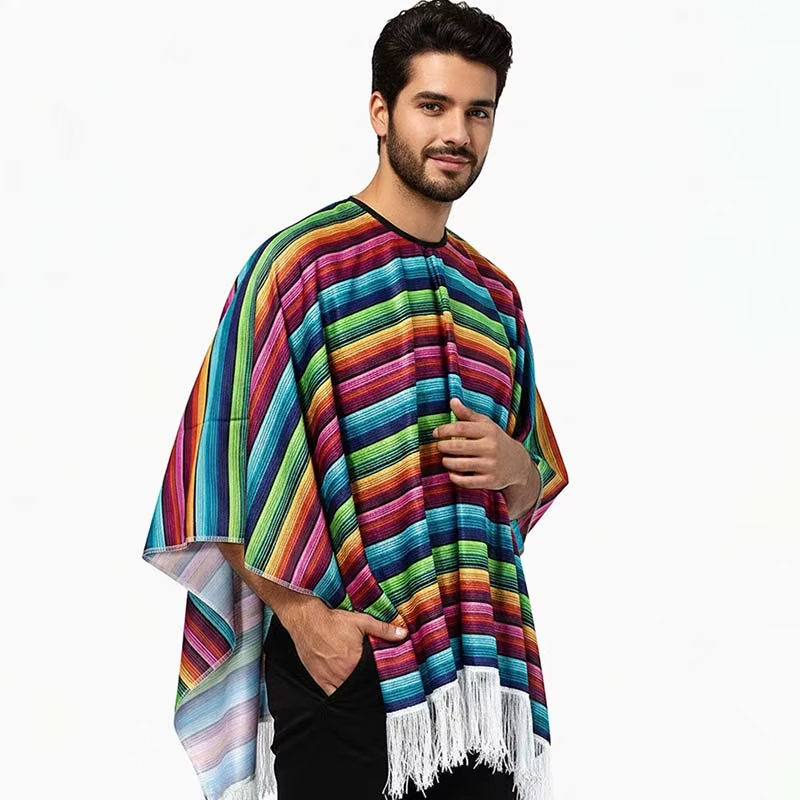
The poncho is a style of outerwear that has been very popular for many years. It is an unbelted robe usually with a head opening.
Ponchos are very popular in Mexico and the US. They are especially popular in the US during the winter because they are very colorful and add pattern and interest to drab winter outfits.
Our Mexican Poncho Guide will give you information about the various styles and choices of ponchos as well as show you how to care for your Mexican clothing to keep the colors bright.
The Different Types of Mexican Clothing
For thousands of years the women of Mexico have been creating woven and knotted textiles to make cloaks. These textiles are an important part of Mexican culture. A poncho is more than a piece of cloth it is a connection with the land and the people who worked the land and created it.
In our guide you will learn about the different types of Mexican clothing and the history that is connected to each piece.
Local Customs and First Nations Peoples
In what is now Mexico prior to contact with the Spanish various indigenous peoples developed various methods for creating clothing. Sustainable sources for fabric such as cotton and maguey (a type of cactus) were fairly common and with varying levels of skill different types of fabric could be created to endure various climates.
Different environments necessitated the creation of different types of clothing. For example the clothes made for the protection of a traveller from the sun might not give adequate protection from the chill of the evening.
A Standard Type of Clothing: The Poncho
Of all the types of clothing that belong to the Mexican tradition the most simple and perhaps the most well known is the poncho. The poncho has one large opening through which the head is to be worn and the remainder of the fabric is to be draped across the body.
There are other simple pieces of traditional Mexican clothing which are similar and include:
- The Serape a long fabric shawl.
- The Rebozo a fabric scarf.
- The Jorongo a poncho for horseback riding.
- Cultural Identity and Traditional Values
Often the weaving of a traditional poncho or other type of traditional clothing is done to commemorate and preserve a cultural value and the weaver often includes symbols which allude to a particular experience of the culture.
The meticulousness with which a particular value or practice is woven into the fabric denotes the creator’s commitment to cultural identity.
- GARMENT TYPE
- PONCHO
- SERAPE
- REBOZO
- JORONGO
- Primary Use
- Everyday Warmth
- Formal/Ceremonial
- Equestrian Use
- Other
- Heavy Weave
- Key Feature
- Fringed Ends
- Striped Pattern
- Versatile Wrap
A Bridge Over Time
Appreciating the skill and history of Mexican Ponchos is enjoyable and gives us insight into some of the finest forms of art and ancient history. These innovations and techniques keep ancient traditions alive and well.
Poncho Styles for Different Looks
Because of the variation in ancient designs and structures the modern world has a wide selection of shapes and styles when it comes to Mexican ponchos. From contemporary styling to retro these pieces fulfill the needs of various consumers.
Wool Ponchos
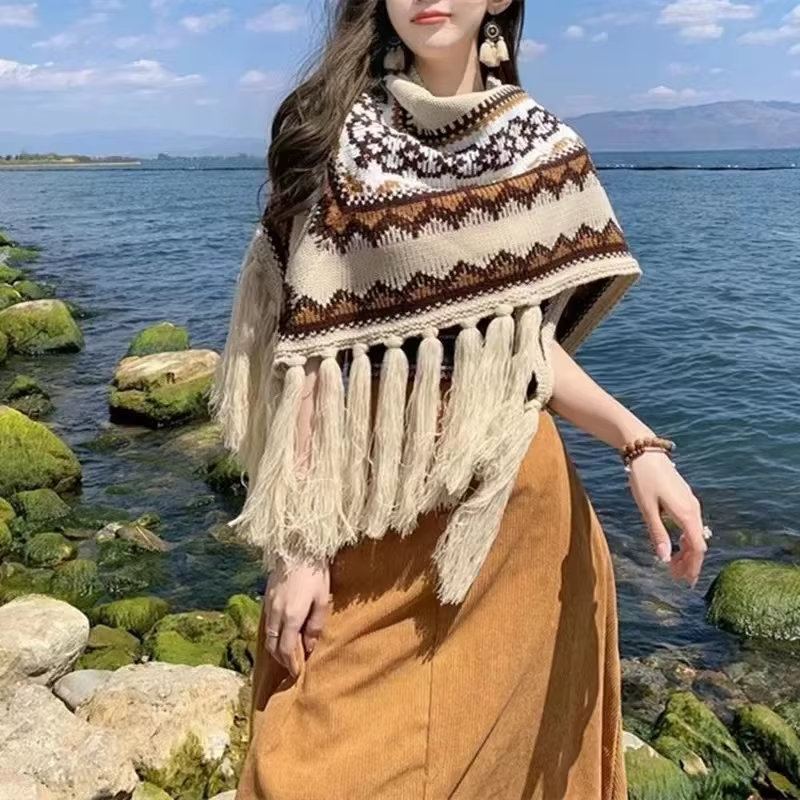
Mexican wool ponchos are warm and soft retaining ancient characteristics. A textile historian explained that in terms of style and ancient craftsmanship the timelessness of the wool poncho is unmatched.
Bold Stripes
A strong and ancient design element of Mexican serapes is horizontal stripes. Serapes are similar to ponchos and can be used for different functions.
The ancient designs and patterns of serapes are representative of different stories. Wearing serapes brings ancient designs to the forefront of modern society.
Hooded and Fringed Poncho Designs
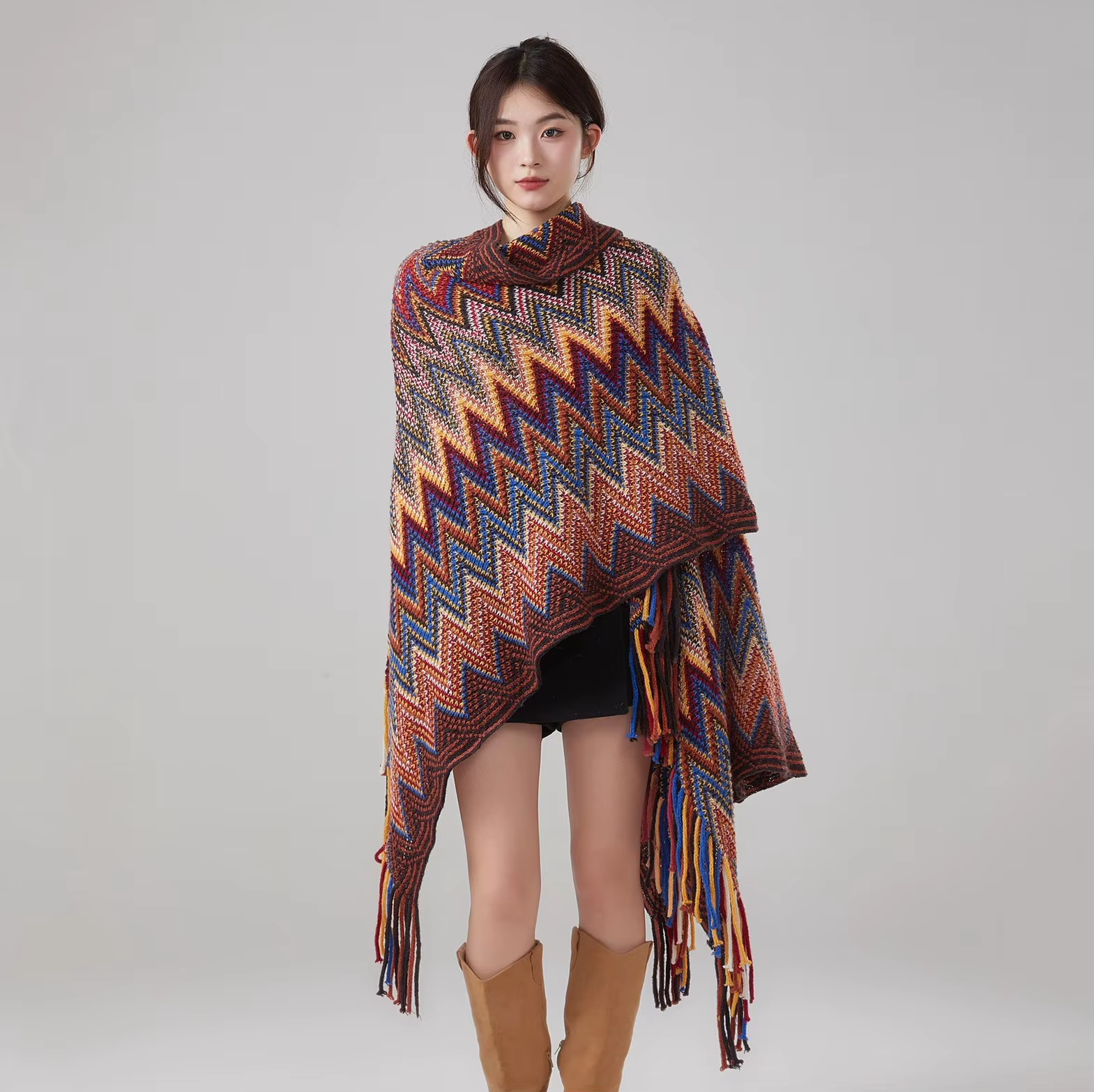
Ponchos have become increasingly fashionable and can be found in various styles, A popular design has been to include a hood to provide additional protection from the elements. A design inspired by bohemian styles includes a fringe.
As opposed from being made from bulky materials these designs often use a thin fabric and as a result can be worn when the weather is not too cold.
Choosing Colors and Patterns
When developing an outfit determine colors based on your existing wardrobe. When creating an outfit with a poncho consider the following.
If you want to bring attention to the design of your poncho make your base layers such as a shirt black or other neutral color.
If your accessories match the color of a poncho stripe that can also bring an outfit together.
Bronze or other earth tone colors can also bring an outfit together and are appropriate to wear during the fall.
Poncho Styling
A popular way to wear a poncho is with skinny jeans Other ways to style a poncho is to wear knee high boots or suede ankle boots, For a similar effect a thin midi skirt can also be worn.
Choosing the perfect Mexican poncho requires understanding fabrics and construction. Different materials affect longevity and various qualities impact how you enjoy your daily activities. The aim is to find a poncho that ticks all your boxes.
A Few Fabric Facts
Different materials affect the functionality of ponchos. Wool is the best material for keeping out the cold and beating the elements. It’s also easy to care for as compared to other natural fabrics. Because it’s water-resistant and provides superior insulation wool is ideal to keep you cozy and dry in the rain or during cold and blustery days, Cotton is a less expensive and more breathable alternative to wool. Because it’s a natural fiber it’s gentle to the skin and keeps you warm and dry, It retains less than 10% of its volume when wet, Though it’s not as warm as other materials it’s perfect for use in mild climates, Acrylic is a synthetic fiber that’s easier to care for retains its shape and is less prone to shrinking, Artisans have found creative ways to blend different fibers to achieve a wide array of textures and in turn a warm and stylish poncho.
Drape and Size
A typical poncho should have arm hole openings and coverage over the entire shoulder. It should be long enough to drape over the torso and core. The fabric should allow free and easy movement of the arms.
Make sure the length is right for your height. If it is too long the poncho will limit your movement and could get in the way. A good length will allow you to move freely and give you a striking appearance.
Assessing Weave Quality Fringe Seams and Colorfastness
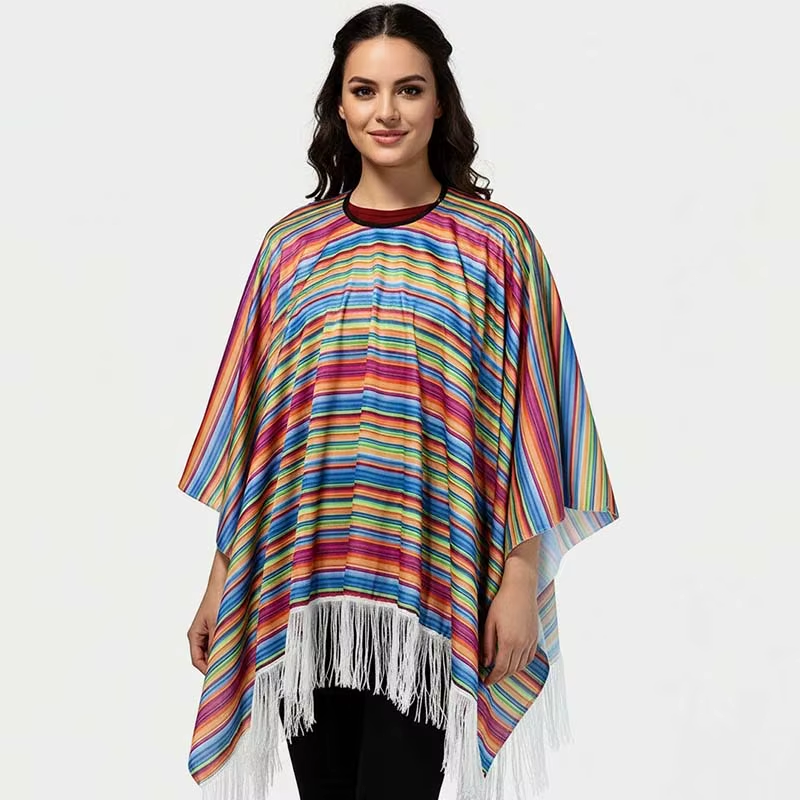
To assess the quality of a poncho you need to look closely at the craftsmanship, The weave of the fabric can be checked for a tight even pattern, Loose threads can lead to snagging The fringe and seams can also be checked to see if they are secure, To check if a poncho is colorfast check to see if the fabric bleeds, This can be checked by rubbing a damp cloth on the fabric.
Things to Consider When Buying a Poncho for Light Layering in Mild Weather
Ponchos are great to wear over top of your other clothes because they are lightweight and appropriate to wear in the spring and fall.
Things to Consider When Buying a Poncho for Winter Layering
A similar concept to a poncho can be used to create warmth in other areas of your outfit. Thicker heavier wool or wool blend fabrics can create warmth in your outfit and give you a stylish look. These types of fabrics can be used to replace standard winter coats.
Conclusion
Your appreciation for culture fabric and style needs to be in perfect harmony to appreciate the beauty in select pieces and more often than not you’ll find yourself drawn to an eye-catching serape or a stylish sheep’s Wool design.
Each serape is a work of art and with proper care and maintenance it’s beauty can be preserved for many years. Look for care instructions which are usually found on a garment’s label to determine how the serape should be cleaned.
Knowing how to clean and care for a serape helps to retain the serape’s artistic design. Fringe in particular can be damaged by carelessness. When possible a serape should be hand washed or professionally dry cleaned to maintain its original design.
Rely on these care tips to extend the life of your garment and to help maintain cultural artistry. For additional care tips or to ask a question about your Mexican serape please use the comments section.
FAQ
What are the definitions of a Mexican poncho serape and jorongo?
People tend to use these terms to refer to the same thing, A poncho is an outer garment with a large opening for the head, A serape is a large blanket that is carried over the shoulder. A jorongo is a type of poncho worn for horseback riding that is also carried over the shoulder and has a slit for the head. Each of these generally reflect different parts of Mexican textile and traditional dress.
How can I evaluate the quality of a woven poncho?
When evaluating a poncho look to see how close the weaving is and check to see if the colors run. A good poncho will have fringe that is securely woven, The design of ponchos traditionally features intricate geometric patterns, If the fabric feels good to the touch and the design is crisp then the item is probably of good quality.
What is the best way to modernize a serape poncho to make it more appropriate for everyday wear?
Bold colors and stripes are the trademark of a serape poncho, With so much going on on the top half of your body wearing other bold colors will clash. Serape ponchos look best with neutral colors. A good choice for bottoms would be dark wash jeans and Timberland’s for footwear. This outfits gives a Bohemian look with good Balance.
Can I Machine Wash Mexican Ponchos?
To retain the design and details of the artisan weavers and to prevent shrinking machine washing should be avoided. Woolity soap which is gentler than other soaps can be used for hand washing. The poncho should never be wringed out as the fringe can easily become matted. Instead it should be rolled up in a towel to help absorb the water and maintained a poncho shape.
Are Mexican Ponchos “One Size Fits All”?
Mexican Ponchos are designed to be oversized. However it is essential that the wearer is able to comfortably move their arms and that the Shoulder coverage is sufficient. Consider the length of the Poncho as well. A Poncho that is too long can make a small person look smaller and seemingly overwhelmed by their clothes. On the other hand too short of a Poncho may not keep a person warm.
About the author : admin

Related posts
Popular products
-
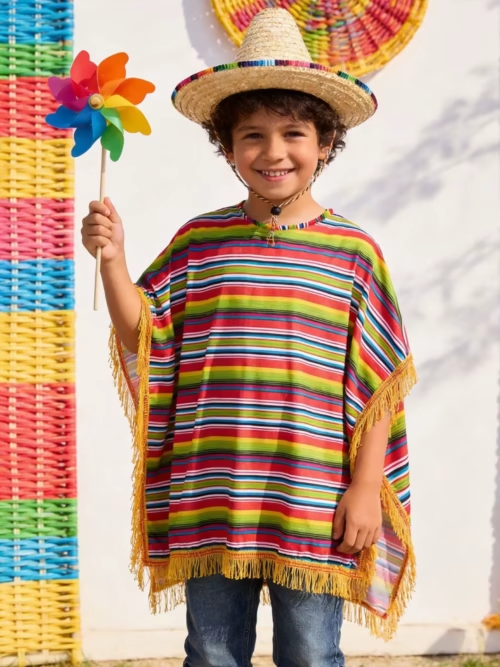 Children's Carnival School Performance Mexican Poncho Ethnic Style Coswear Cloak Straw Hat Party Set
$11.64
Children's Carnival School Performance Mexican Poncho Ethnic Style Coswear Cloak Straw Hat Party Set
$11.64
-
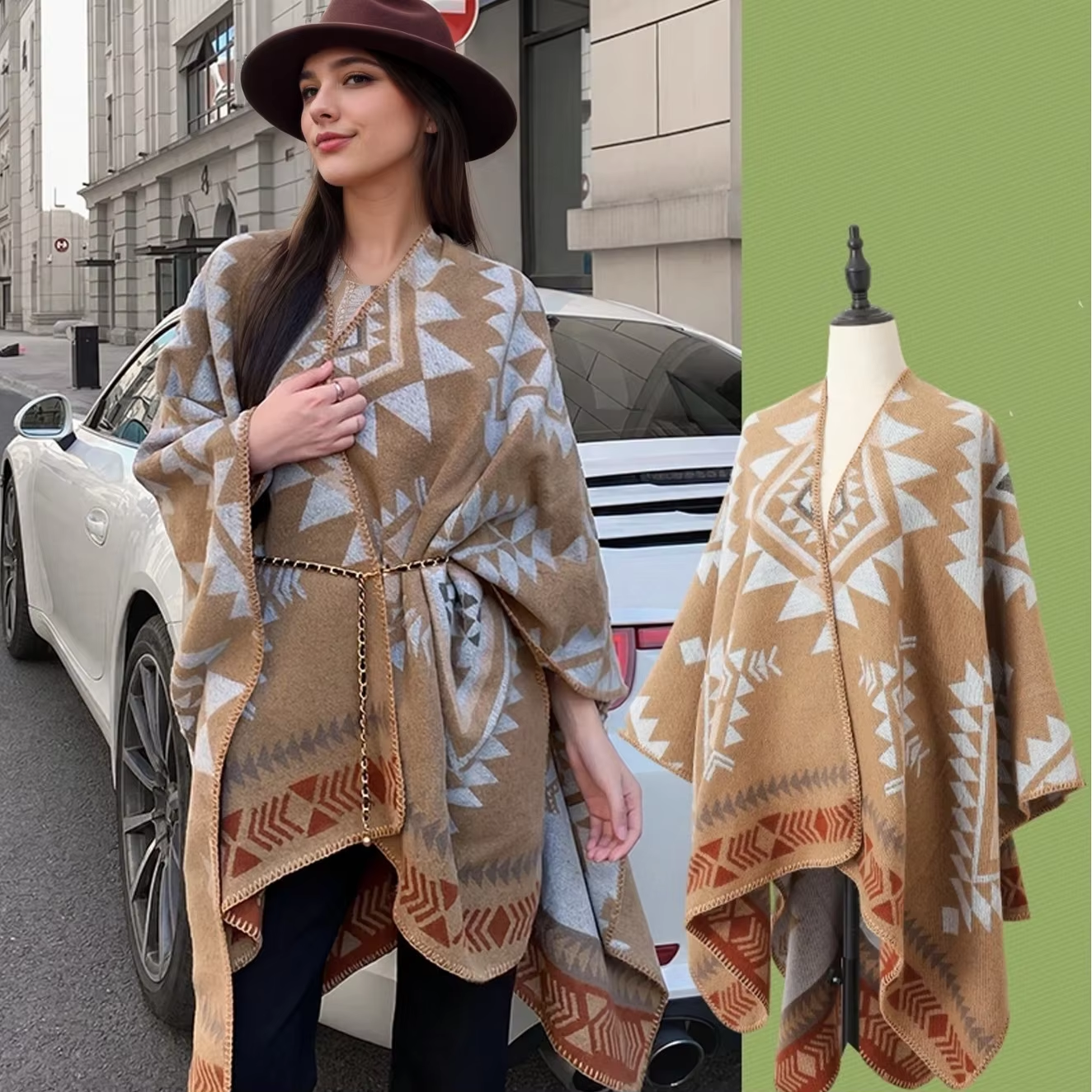
 Mexican Poncho Autumn winter Poncho new warm European and American shawl hot selling woven geometric slit cape Women Cloak P1
$11.43
Mexican Poncho Autumn winter Poncho new warm European and American shawl hot selling woven geometric slit cape Women Cloak P1
$11.43
-
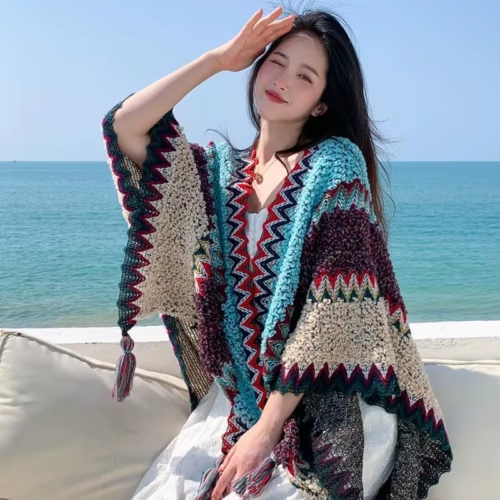 Mexican Poncho Ethnic Style Cape Oversized Sweater Jacket Women Fashion New Loose Patchwork Warm Long Scarf Knitted Cardigan Woman
$8.88
Mexican Poncho Ethnic Style Cape Oversized Sweater Jacket Women Fashion New Loose Patchwork Warm Long Scarf Knitted Cardigan Woman
$8.88
-
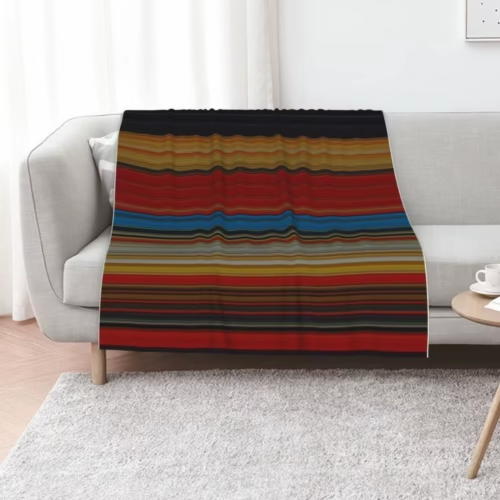 Mexican Poncho Background Throw Blanket Plush Personalized Gift Large Thermals For Travel Flannels Blankets
$16.31
Mexican Poncho Background Throw Blanket Plush Personalized Gift Large Thermals For Travel Flannels Blankets
$16.31
