
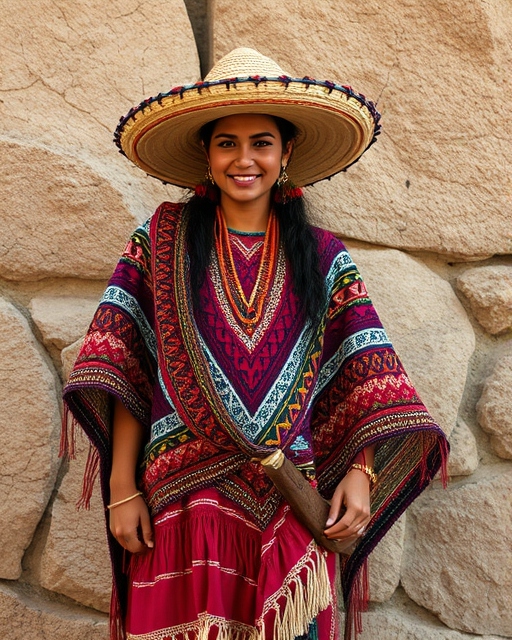
A classic striped Mexican poncho will catch the most eyes on more laid back outings but a hooded Baja style is easy to slip on or take off throughout the day and a thicker wool weave is naturally denser and warmer. A bulky fringe style can get in the way when layering so keep that in mind for travel plans, Depending on your wardrobe needs you can opt for a unisex men’s or women’s design, It’s best to identify the setting you want to wear it in most and then match the cut fiber and other details to your needs.
Wool is a good denser weave choice for cooler days and Baja hoodies are easy to slip on or take off as a layering piece. Stripes are easy to wear everyday, To make a choice you don’t necessarily need to rely on a label with your familiar pattern you can look at the cuts the fibers the colors and the listing details and compare for example the inch measurements.
Key Takeaways
- For travel compare measurements instead of trusting a gender label.
- Check fibers care instructions terms and return policies.
- Start with wearing it most in mind and pick the right cut fiber and details for the setting.
- What’s the Difference? Mexican Ponchos for Men Women and for Serape Style
The opening offers a clue to determine if a piece is a wearable poncho vs. a top that goes on like a pullover. A serape is a piece of textile usually striped that can be worn as a wrap or can be made into a poncho. The 1830-1860 Saltillo serape held at The Met describes a piece of textile and provides historical evidence for the Serape noting that it could also be worn as a poncho if it had a neck slit.
Classic striped serapes and heavy woven styles
Serapes can also be transformed into an eye-catching garment by making the stripes on the textile into a poncho. Heavy woven gaban styles offer a denser and more textured appearance and feel compared to other lightweight striped textiles. A reversible design provides a choice of 2 different contrasting motifs giving you 2 unique outfits with one piece.
Baja Hoodies and Blanket-Style Ponchos
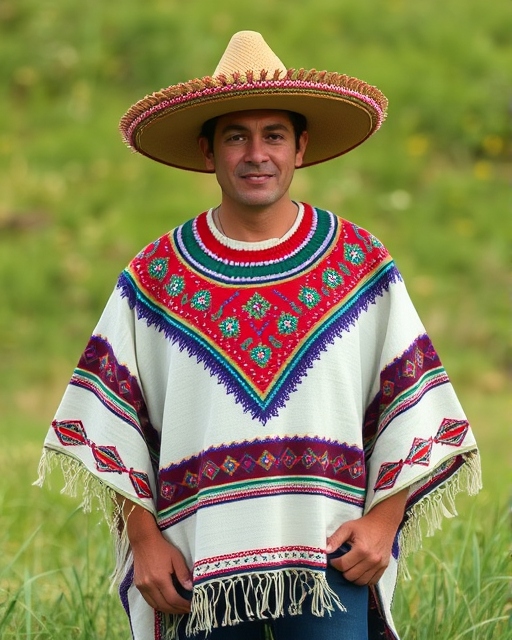
Baja hoodies are just pullover hoodies so a Mexican poncho hoodie is just a traditional Mexican open poncho with a hood added. A Mexican poncho blanket is a blanket-like construction with a head opening like a poncho. You should check a garment’s construction before picking between a Mexican poncho hoodie and a Mexican poncho blanket.
How Should Men’s and Women’s Ponchos Fit?
The fit of a poncho is what’s important over whether it says men’s or women’s on the label. Pick a poncho with measurements you’re happy with and check that your arms can be comfortably moved at your sides. Design features can vary between makers so judge a poncho’s coverage based on measurements not labels.
A poncho is unisex by nature so a good fit is possible for a variety of body shapes. For a general design a men’s or women’s label on a poncho may describe a traditional long or short length but these are not set in stone.
- Style
- Fit
- Layering
- Pull-on poncho
- Fit and length
- Shirt or light jacket
- Ponchos are more ‘women’s’ than ‘men’s’ style
- Relaxed style may be offered
- Ponchos are longer than capes
- Arm and opening placement
- Fitted or flowing
Which Fibers Offer the Warmth and Care You Need?
For a warm feeling a thick and heavy wool or wool blend weave would be a better choice than a lightweight acrylic poncho, Dense weave and garment weight can also affect warmth, A thick wool blanket would be warmer than a thin merino wool blanket but a synthetic fiber blanket would still be cold, Weight is also density so two pieces made from the same fiber can still feel different. A wool blend is not the same as pure wool.
A wool poncho can keep you warm in cooler temperatures and a heavier weave can give it more substance, You may appreciate the substance on a cold walk but it could be cumbersome on a warm walk for errands or travel, An authentic wool Mexican poncho is identified by listed fiber content and not by stripes or a traditional look.
Wool and wool blends for cooler weather
Choose a wool poncho when a featherlight poncho is not as important as a more substances one, A wool blend can be a combination of multiple fibers and the proportion of each can impact how the poncho feels, Pay close attention to the fiber content and not assume a wool blend is completely wool, A dense weave of a poncho can also give more coverage.
Acrylic and acrylic blends for easy care
Acrylic is lighter and can dry faster than wool so it can be ideal for easy care and everyday use. An acrylic wool blend can be any combination of the two so paying close attention to the fiber content can help, Wool may require a more gentle care and a poncho’s care instructions can override general rules of care.
Consider where the garment will reside while not in use, Wool has excellent insulating properties but it can take a long time to dry, A garment made from a thicker denser wool may not be as nice to travel with as something made from a faster drying fiber. One of the reasons people travel with a poncho is to stay warm.
What colors work for every day wear travel and events?
Something black and dense like a poncho tends to blend in with the rest of a travel wardrobe. Black pieces like Mexican ponchos can fill the bottom or top of an outfit with anchor pieces. The contrast of colors and a bold print can easily take the focus of an outfit like a bright striped poncho. A thick dense piece tends to blend in and serve to anchor a travel wardrobe. Bright colors can pop for a travel outfit to a festival.
Before washing always read the care label, The care of a garment depends on the composition and the weave. Each weave and fiber has a unique property and weight. Wool can range from a lower denser weave that is warmer to a lighter weave that can serve more as an insulator. For traveling a dense warmer weave would be ideal to stay warm. The same can be said for an insulator to block wind.
I prefer a more subdued multicolor serape and a more dramatic all black serape. You can include patterns in otherwise simpler outfits, Think about pieces you already take on a trip or grab for the day and include colors that go with those, You will wear a serape more if it complements the outfits you already plan on wearing with it.
How Can You Judge Traditional Mexican Craftsmanship?
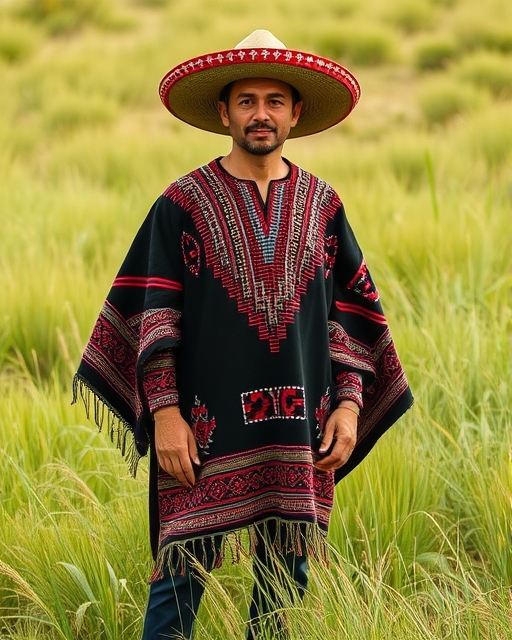
It is often the case that a traditional-looking design goes hand in hand with craftsmanship; however familiarity is not indicative of craftsmanship, Describing how a garment was made is the best indicator of craftsmanship. Use of a particular type of wool weave edge finish or other materials may or may not indicate a garment was indeed made in Mexico.
There are many traditions in Mexican textiles including regional weaving and differences in fiber and construction. The names of serapes and ponchos are not interchangeable; serapes are wrap textiles and ponchos have a head opening. Textile design and patterns also carry traditional methods and their cultural and social significance is important as well.
Fiber content naming the materials.
Visible weave and finish.
Description of the maker and regional technique.
Ponchos made in Mexico can have various regional styles and hand woven wool designs but just because something has stripes or an Aztec calendar design doesn’t mean it’s handmade or made in Mexico.
What Should You Check Before Buying?
Compare the fibers measurements care instructions and return policy terms in the listings.
Poncho measurements like width and length are better than size labels which are subjective.
Fiber and care instructions should be listed in the sale. Terms that apply to each sale including price can be different for each listing.
The listing provides a wealth of information and it is helpful to understand why it matters. Given your case is related to fiber it is important to understand how precise the listing is about the fiber.
- Exact fiber content
- Measurements
- Does it help you assess coverage and layering?
- Care
- Does it help you determine the upkeep frequency?
- Returns
- What is the return window?
- Are there any conditions?
Does it explain your options if the fit is wrong?
Save the listing details you relied on for the fit test and check the fit and finish of the actual product.
Conclusion
Of all the options you provided the poncho is the best fit for your everyday layers and something that is easier to care for. The cut may need some modification based on your intended use. Precise fiber content and care instructions provide evidence as to whether the item fits your routine. Something that fits and looks right may still not see the light of day due to high maintenance.
For your final check choose two options and compare washing and drying instructions and measurements that affect coverage.
FAQ
Can a poncho fit over a winter coat?
Yes. A poncho can fit over a winter coat if it is wide enough to fit the coat and your arms, Consider how the opening sits when your arms move forward, Also consider how the drape or the width of the body of the poncho restricts movement.
What causes woolen ponchos to shrink?
Use the care label instructions and the lowest temperatures for washing and drying that are permitted, If drying is permitted lay the garment flat to dry as tumbling it may distort the shape, Wool loses its shape and may shrink if dried or washed using unsuitable methods, Unless labeled otherwise hand washing is not a safe assumption for woolen garments.
Can I wear a Mexican poncho in the rain?
Not all woven fabrics are waterproof. A thin layer of rain may quickly shed from some fabrics but for heavy or extended periods of rain a waterproof layer is a better option. For expected wet weather a waterproof layer is preferable to a poncho made of woven fabric.
Are ponchos good for snow?
Wool can add a layer of warmth but a poncho isn’t going to replace a proper winter coat. The sides of a poncho are open and in windy conditions the poncho isn’t going to do much to keep the cold from reaching your layers. Unless the poncho is designed with specific features to block the cold treat it as an additional layer.
Can you drive with a poncho?
There are laws against obstructing a person’s view with a large piece of fabric, To avoid violating the law make sure there is nothing that interferes with the steering or controls, The belt should lie across your body and the fabric should not be caught under the seat, If the poncho is impeding your view or movement while driving take it off.
How do you prevent a bulky look with a poncho?
While a thick base layer is better than a thin one if the sleeves are tight the arms of a poncho shouldn’t be bulky and the fabric shouldn’t be poufy around the arms. Close-fitting sleeves are also better than sleeves that are roomy. Ponchos with room for movement should be fitted and not too big.
About the author : admin

Related posts
Popular products
-
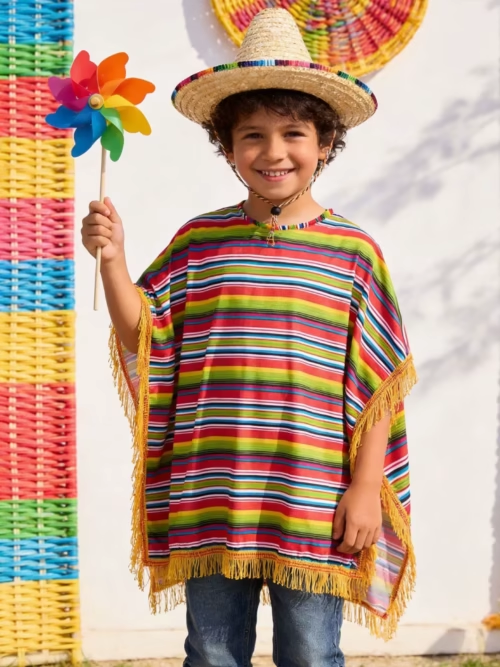 Children's Carnival School Performance Mexican Poncho Ethnic Style Coswear Cloak Straw Hat Party Set
$11.64
-
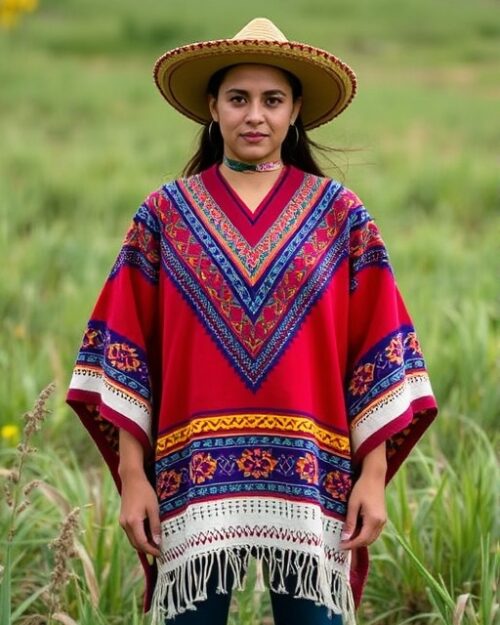 Mexican Poncho Autumn winter Poncho new warm European and American shawl hot selling woven geometric slit cape Women Cloak P1
$11.43
-
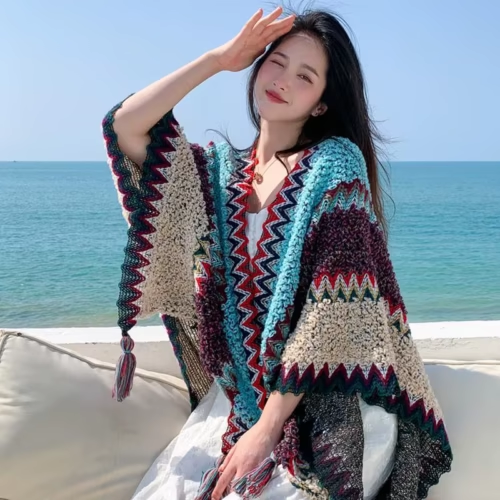 Mexican Poncho Ethnic Style Cape Oversized Sweater Jacket Women Fashion New Loose Patchwork Warm Long Scarf Knitted Cardigan Woman
$8.88
-
Mexican Poncho Background Throw Blanket Plush Personalized Gift Large Thermals For Travel Flannels Blankets
$16.31
